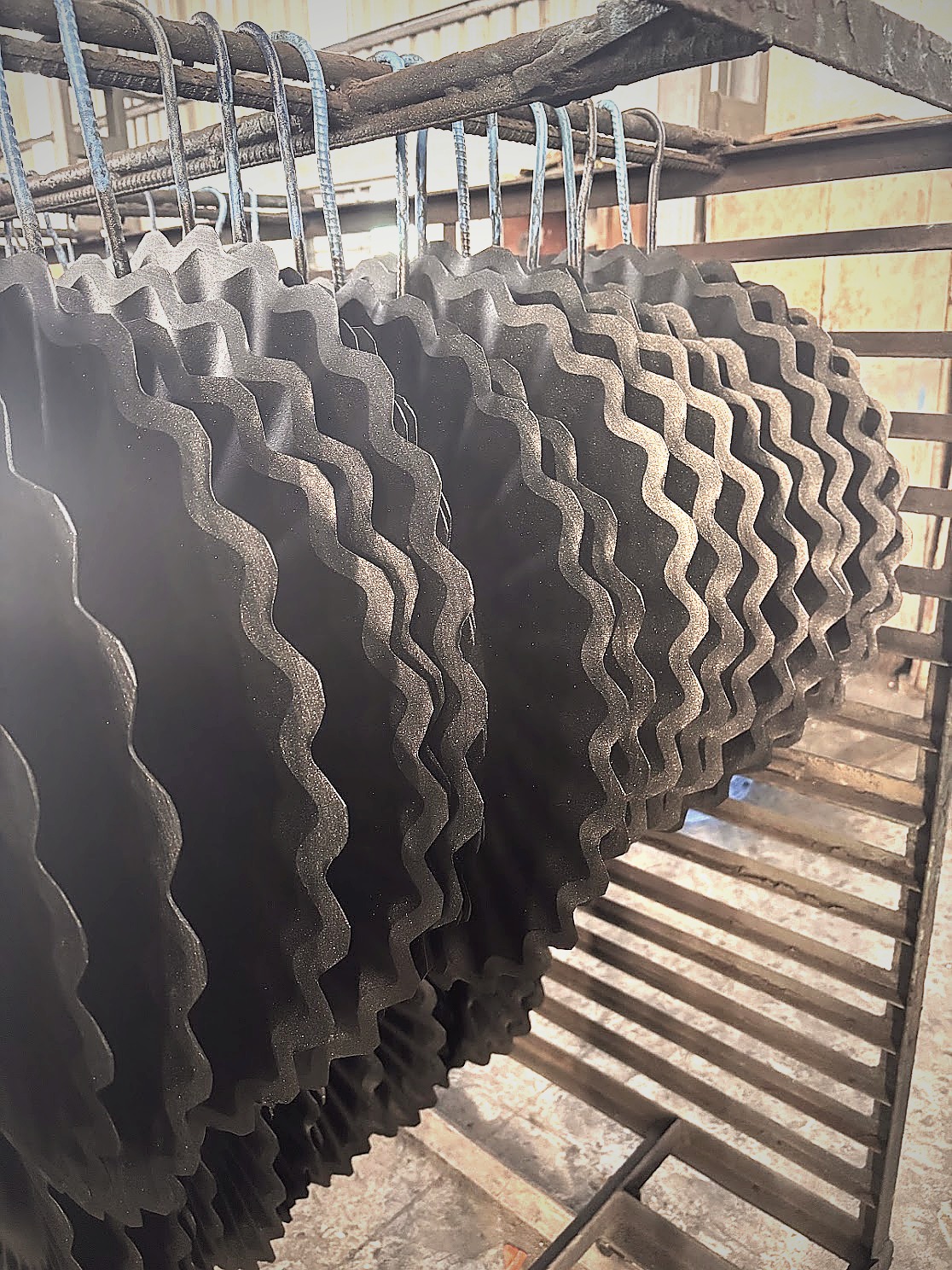
8-zone conveyor furnace in operation Disc blade glowing inside press die Wavy coulter blades post shot blast
01
Raw material
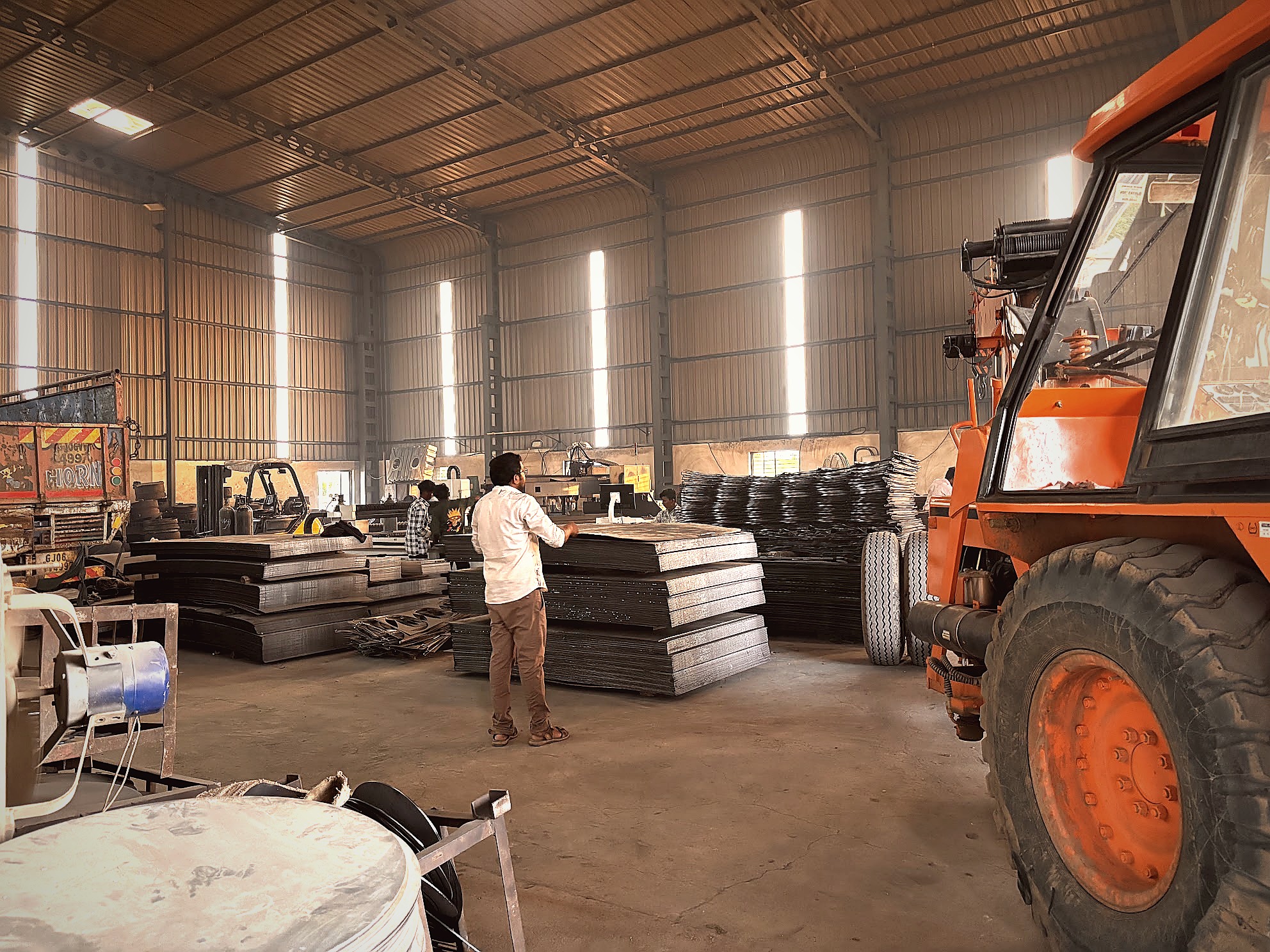
28MnCrB5 steel coils and sheets in Rajpal warehouse
The foundation
Steel from India's finest mills

Everything starts with the coil. We source exclusively from SAIL, Jindal, TATA Steel, and ArcelorMittal — India's most trusted integrated steel plants. Not traders. Not secondary processors. Every coil that enters our facility is traceable to a named mill, a named heat number, and a dated mill test certificate confirming 28MnCrB5 chemistry before we cut the first blank.

SAIL Jindal Steel TATA Steel ArcelorMittal 28MnCrB5 grade Mill test certificates Heat number traceable
The material science
28MnCrB5 — chromium and boron together

28MnCrB5 is not just any boron steel. The chromium addition (0.30–0.60%) improves hardenability uniformly through the disc's full cross-section — not just the surface. The boron (0.0008–0.005%) amplifies the hardness response during quenching, allowing the steel to reach 48–52 HRC with a controlled, repeatable process.

Standard spring steel (65Mn, commonly used by lower-tier Indian manufacturers) achieves 38–44 HRC at best. It also lacks chromium, meaning hardenability drops off sharply toward the centre of thicker blanks. A disc made from 65Mn may test well at the edge on day one — and fail mid-season when the harder case wears through to a softer core.
Carbon 0.25–0.30% Manganese 1.10–1.40% Chromium 0.30–0.60% Boron 0.0008–0.005% Tensile 1,000–1,250 MPa
02
Steel grade
03
Heat treatment
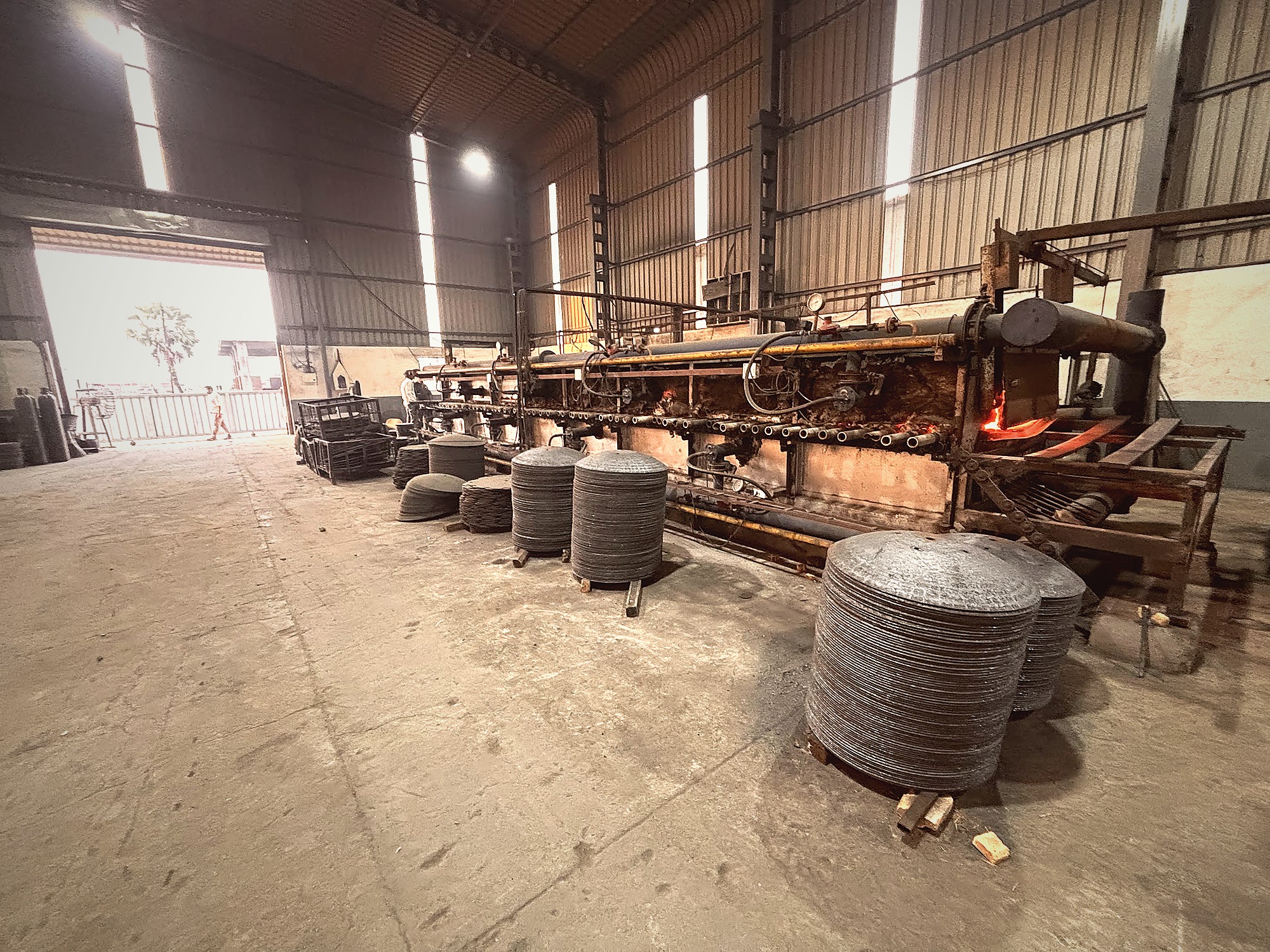
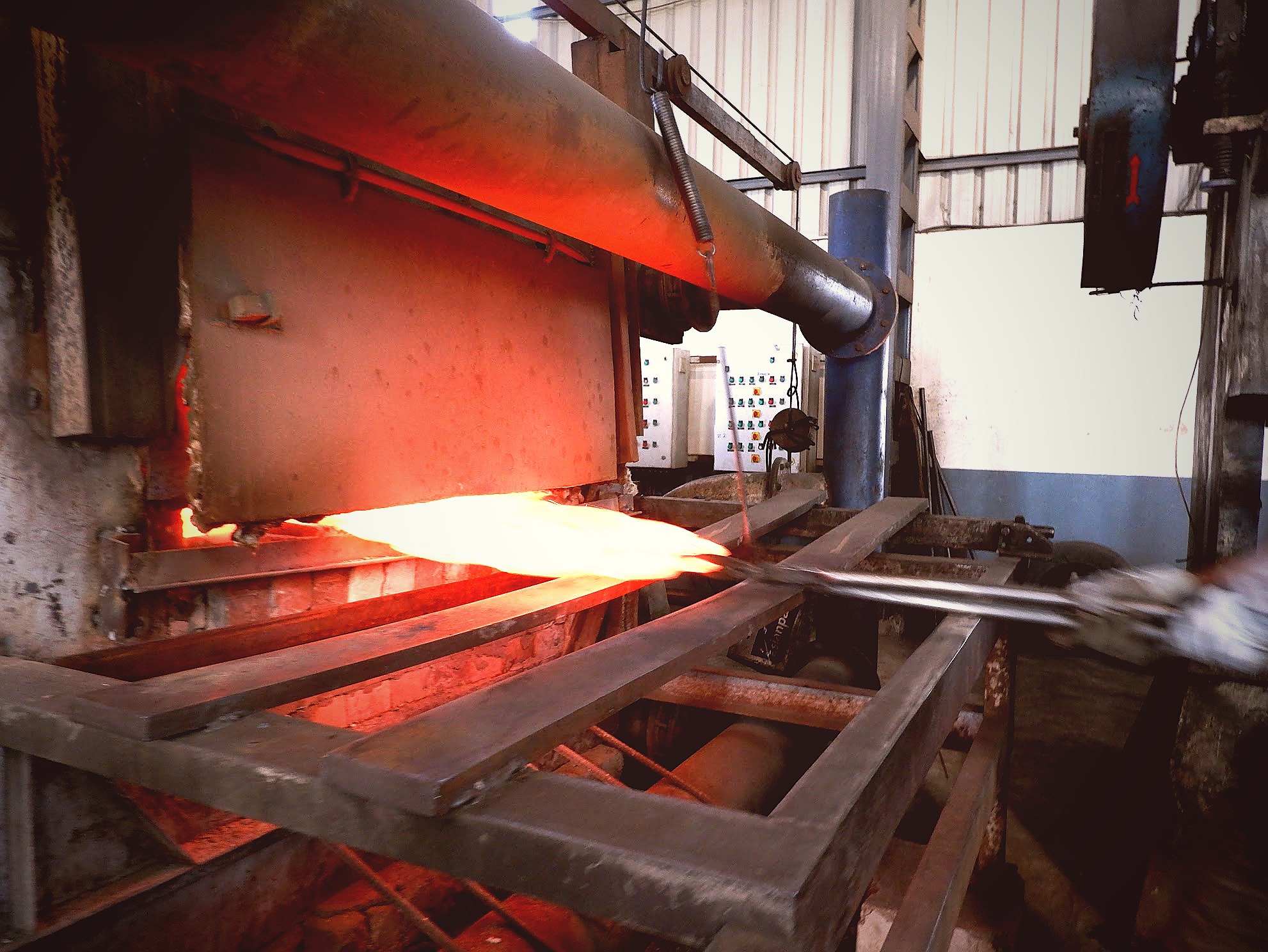
Disc blade exiting 8-zone conveyor furnace at austenitisation temperature
The process
8-zone furnace. 16 burners. No shortcuts.

Heat treatment is where most Indian disc manufacturers cut corners — and where most disc blade failures originate. Our diesel and gas-fired conveyor furnace is 10 metres long with 8 independently controlled temperature zones and 16 burners. Blanks travel through continuously, receiving a uniform soak. After the furnace, our conveyor quenching tank receives each disc inline — no manual handling, no temperature loss between furnace exit and quench entry.

Our process has been formally audited under the Heat Treatment Special Process Audit (HT SPA) framework used by major OEMs to qualify their heat treatment suppliers. Every parameter is documented. Every batch has a record.

8-zone conveyor furnace 16 burners 10 metres length Inline quench tank HT SPA audited Batch records kept
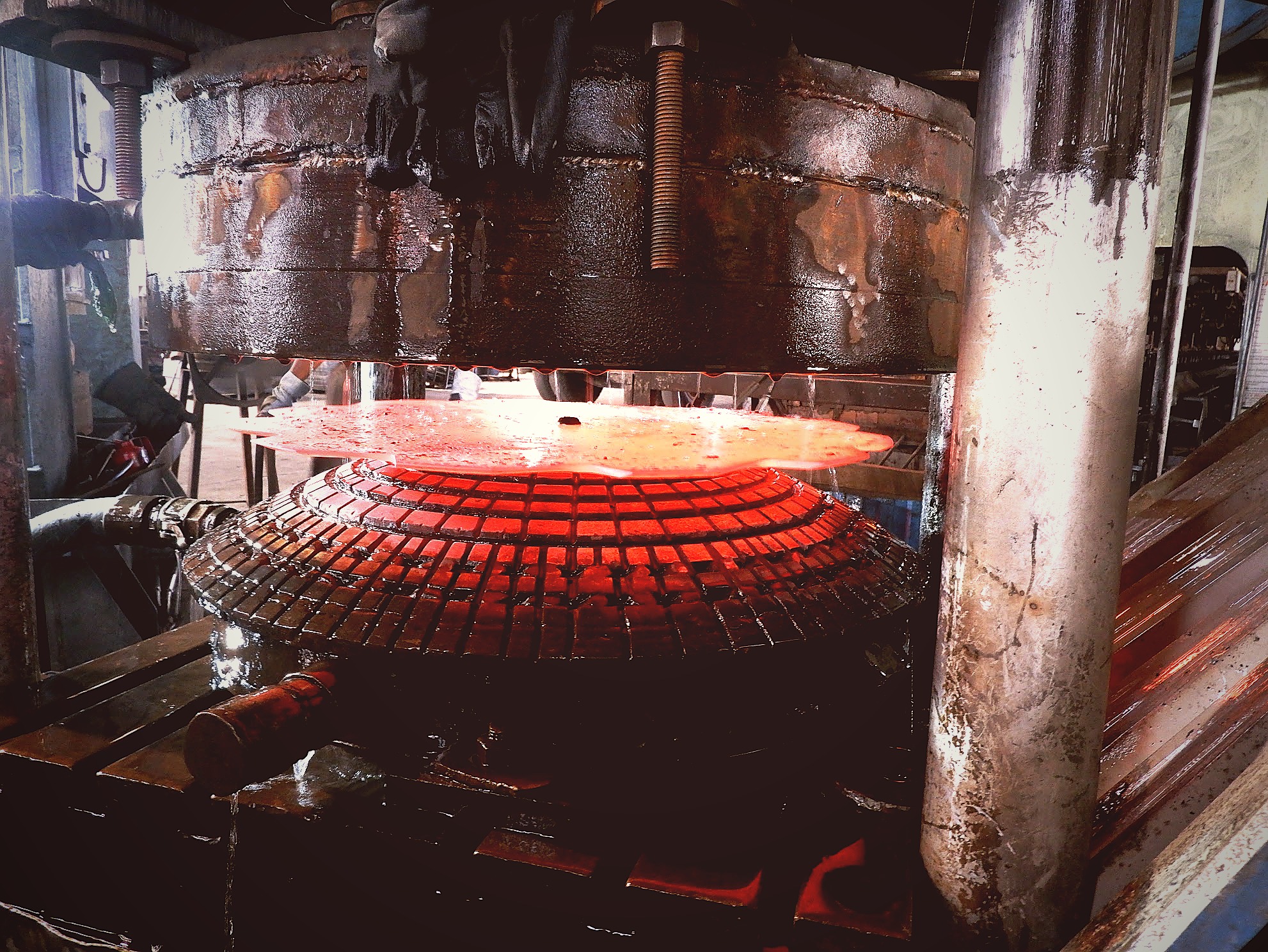
Disc blade at temperature inside press die
The output
48–52 HRC. Hard enough to cut. Tough enough not to crack.

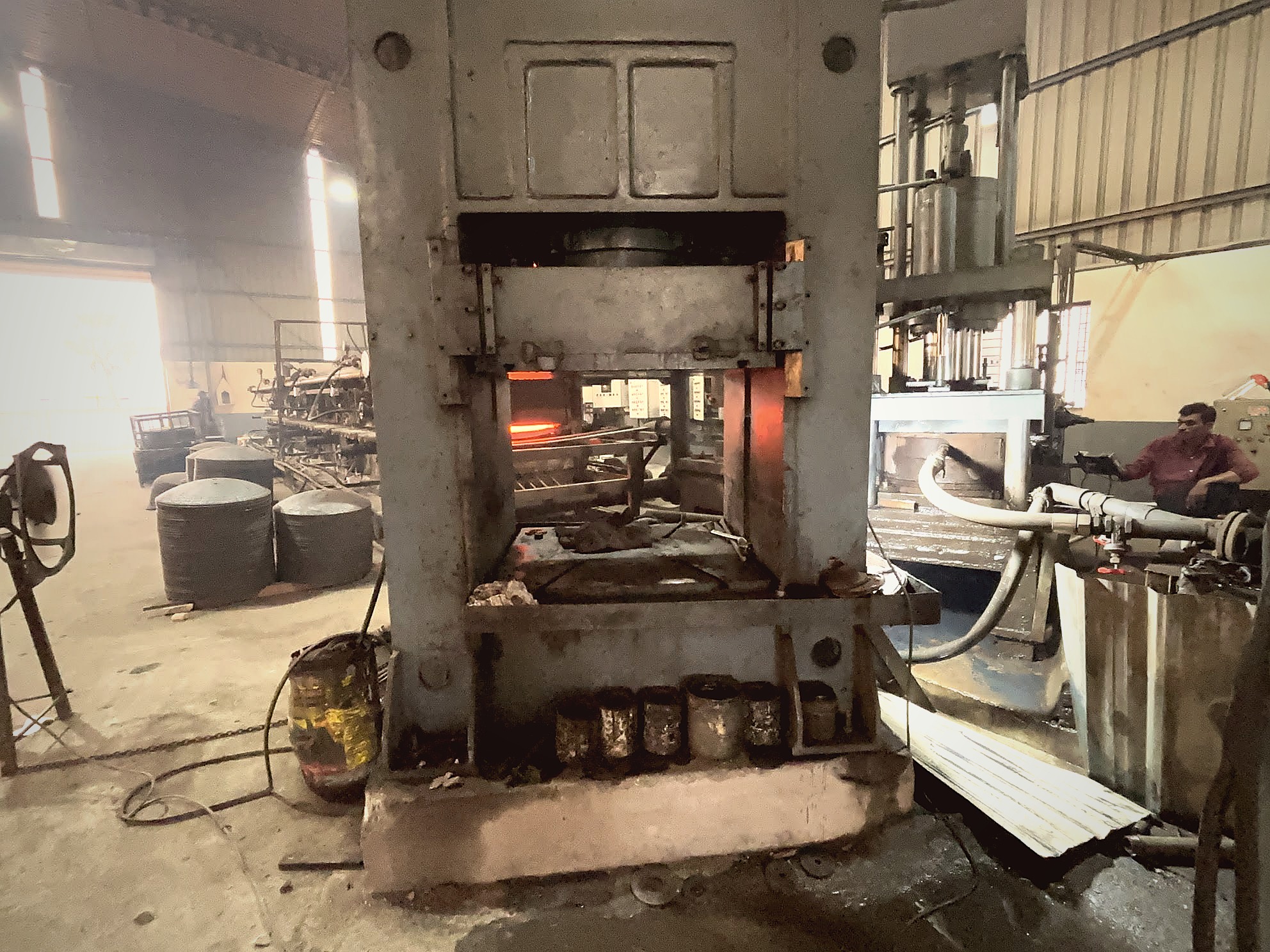
48–52 HRC is the engineered sweet spot for agricultural disc blades. Hard enough to resist abrasive soil wear for multiple seasons. Tough enough to absorb impact from stones, roots, and buried debris without cracking. Our press quench process locks in this range precisely — the disc is constrained in a die during cooling, simultaneously achieving hardness and flatness with no post-quench straightening.
Mild / basic steel
20–28 HRC
Spring steel (65Mn)
35–42 HRC
Our 28MnCrB5 blades
48–52 HRC
Tool / die steel
60–65 HRC
48–52 HRC target Press quench Martensitic microstructure No post-quench straightening
04
Hardness & resilience
05
Consistency
Press quench machine inline with furnace
The discipline
Same spec. Every batch. Every season.

Consistency is the hardest thing to buy in agricultural components. A supplier who delivers a good first order — and a different product on the third — costs you more than a supplier who quotes slightly higher and delivers the same result every time.

Our consistency comes from locked-in inputs: one steel grade (28MnCrB5) from certified mills only, one heat treatment process with documented zone temperatures and soak times, one quench system with controlled cooling rates, and hardness testing on every batch before packing. When you reorder from us, you get the same blade. Consistency is not a claim — it is a record we keep.
One steel grade — always Documented process parameters Hardness tested per batch MTC on every coil HT SPA audited
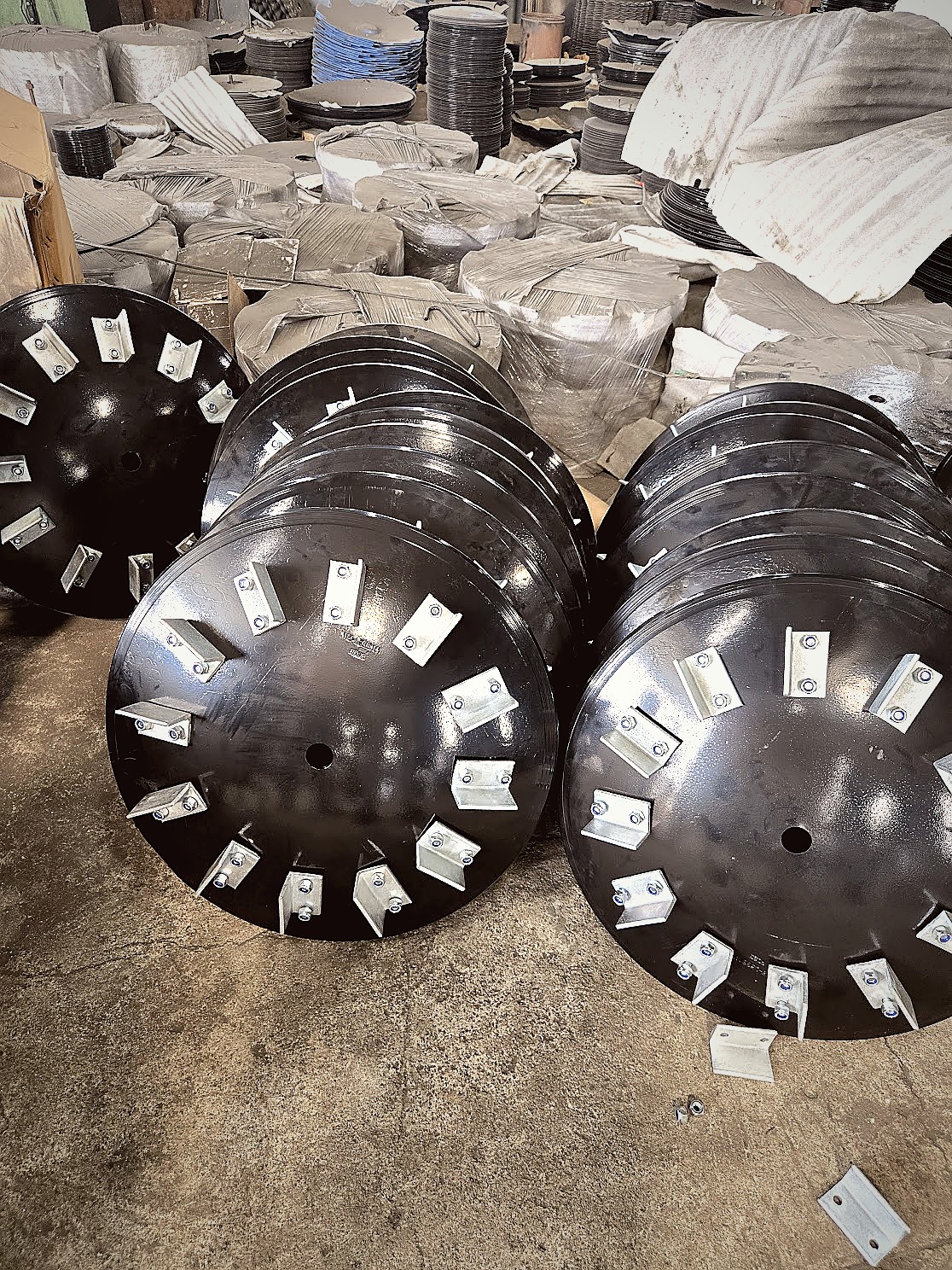
Superseeder disc assemblies ready for dispatch
The service
Flexible quantities. Timely delivery. Every time.

Quality without delivery is just a promise. We handle FCL and LCL shipments, so you are not forced to wait for a full container when you need a top-up order. We work to FOB, CIF, and door-to-door delivery depending on what suits your import process. And we ship on the dates we commit to — because a blade that arrives after your customer's planting window has missed its purpose entirely.

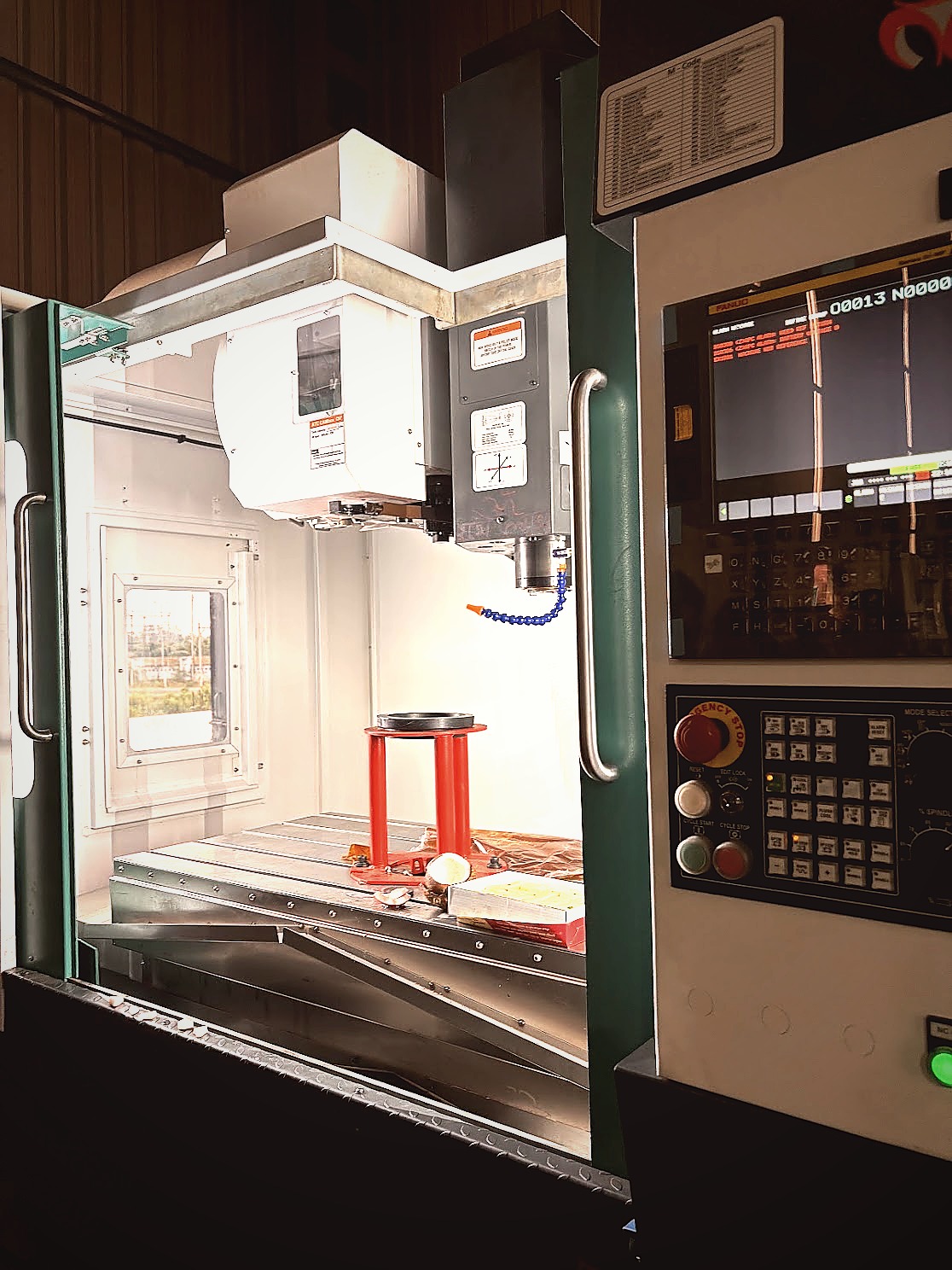
Our in-house CNC laser cutting and toolroom means new profiles can be sampled in 2–3 weeks — new notch geometry, non-standard bore dimensions, or bespoke concavity depths without going back to a third-party tool maker.

FCL & LCL FOB · CIF · Door Custom spec capability In-house laser cutting Pre-production samples 16 export countries
06
Flexibility & delivery

Steel from four world-class mills

We source 28MnCrB5 boron steel exclusively from SAIL, Jindal, TATA Steel, and ArcelorMittal. Not traders. Not secondary processors. The mills themselves — with mill test certificates on every coil.

Jindal
Jindal Steel & Power Ltd.
Leading private sector integrated steel manufacturer. Known for tight chemical tolerances and consistent mechanical properties across heats.
Grade: 28MnCrB5 · Chromium-boron
ISO certified · Mill test certificates on file
TATA
Tata Steel Ltd.
India's oldest and most internationally trusted steel producer. Tata's boron-alloyed grades carry the chemical traceability required for OEM audit-grade documentation.
Grade: 28MnCrB5 · European spec aligned
ISO certified · Globally recognised MTCs
ArcelorMittal
AM/NS India
The world's largest steel producer, operating in India through AM/NS. Preferred for FarmOne Tillage export orders where international buyers require globally recognised mill credentials.
Grade: 28MnCrB5 · Global benchmark spec
ISO certified · International MTCs · European spec
Why it matters
The mill name on the MTC is the difference between a documented specification and a supplier's verbal assurance. We carry the paper.
Request sample MTCs →
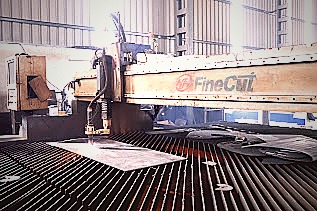
Plasma cutting machine
Plasma cutting
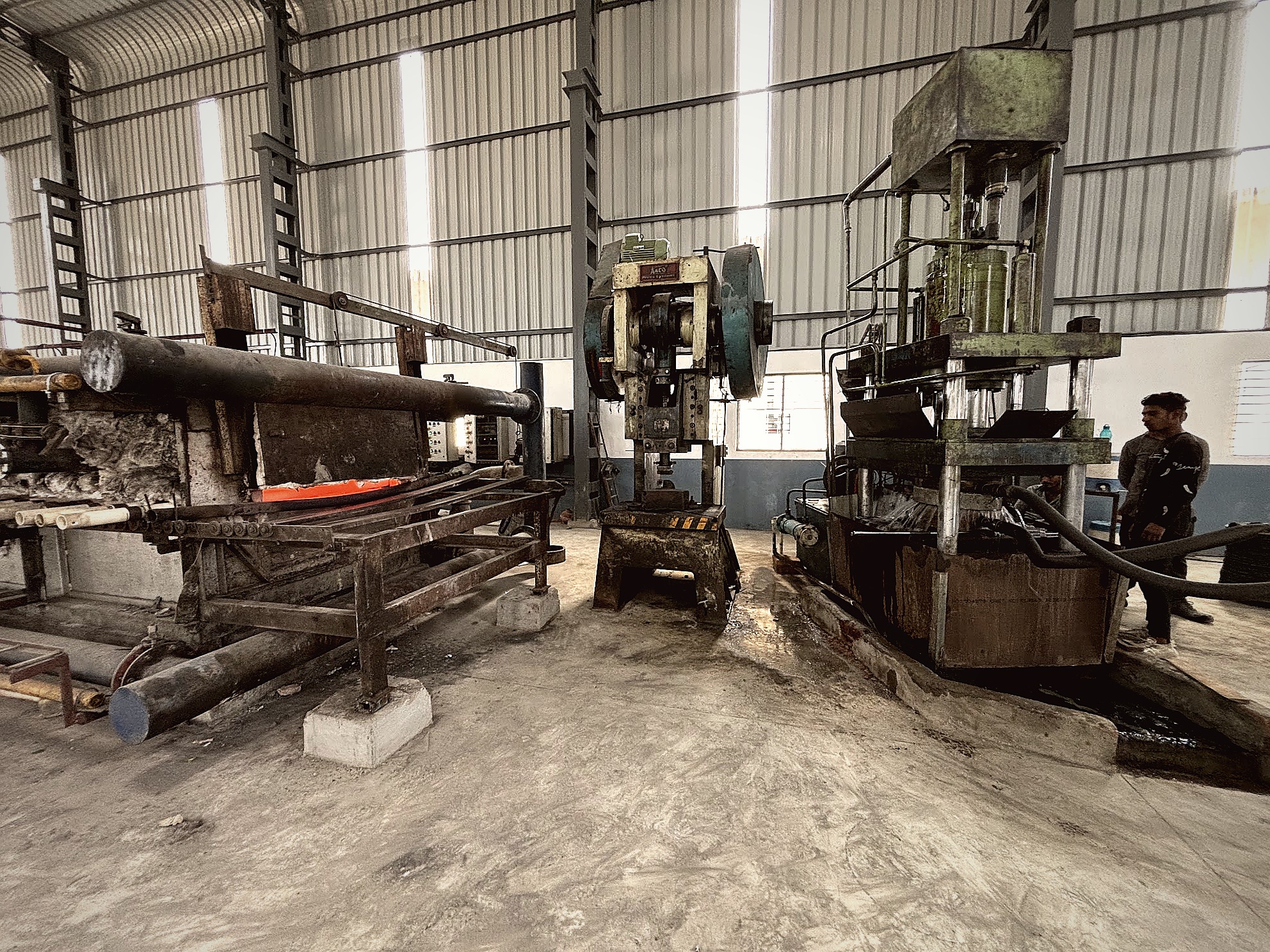
Hydraulic presses
Hydraulic presses
Notched disc blades
Notched disc blades
CNC VMC
CNC VMC

Rajpal vs generic Indian disc blade

Not all disc blades sold in India — or exported from India — are the same. Here is an honest comparison.
Rajpal / Double Gainda / FarmOne Generic Indian manufacturer
Steel grade 28MnCrB5 chromium-boron exclusively — every coil, every batch. Usually 65Mn spring steel or unspecified "boron" sourced from traders.
Raw material source SAIL, Jindal, TATA, or ArcelorMittal direct — with heat-numbered MTCs. Often spot-market or secondary processors. MTCs unavailable or unverifiable.
Hardness achieved 48–52 HRC consistently. Tested on every batch before packing. Typically 38–44 HRC. Batch variation common. Testing inconsistent.
Heat treatment 8-zone conveyor furnace, 16 burners, inline conveyor quench. HT SPA audited. Salt bath or basic furnace. No zone control. Manual quench. No process audit.
Flatness / geometry Press quench locks in flatness. No post-quench straightening needed. Oil-bath quench — discs warp. Manual straightening introduces stress.
Consistency Documented parameters. Same process every run. Same blade every reorder. Operator-dependent. Varies with production shift, coil source, furnace condition.
Documentation Full MTC pack, batch hardness records, process documentation, HT SPA audit report. Commercial invoice only. MTCs not available or fabricated.
Custom profiles CNC laser cutting, in-house toolroom. New profiles sampled in 2–3 weeks. Limited to standard sizes. Custom work requires external tool makers, long lead times.
Export capability FCL and LCL. FOB, CIF, door-to-door. 16 export countries. FCL only in many cases. Documentation gaps for some markets.
Field life Measurably longer — reported by customers in Australia, Europe, and Southeast Asia. Season-dependent. Higher failure rates in abrasive soils and heavy residue conditions.
The difference between a disc blade and a good disc blade is not visible until it fails — or doesn't.
Request a sample →